The Unmasking: David Rosenhan’s “On Being Sane in Insane Places”
The year was 1973 when Stanford psychologist David Rosenhan published his explosive study, “On Being Sane in Insane Places.” It was not just an academic paper; it was a profound challenge to the foundations of psychiatric diagnosis and institutional care. The experiment’s findings were startling, its implications vast, and its reverberations are still felt today in debates over mental health systems and the power of diagnostic labels.
The Setup: Faking the Symptoms
Rosenhan’s core ambition was to test the validity and reliability of psychiatric diagnosis—specifically, whether professionals could reliably distinguish the “sane from the insane.”
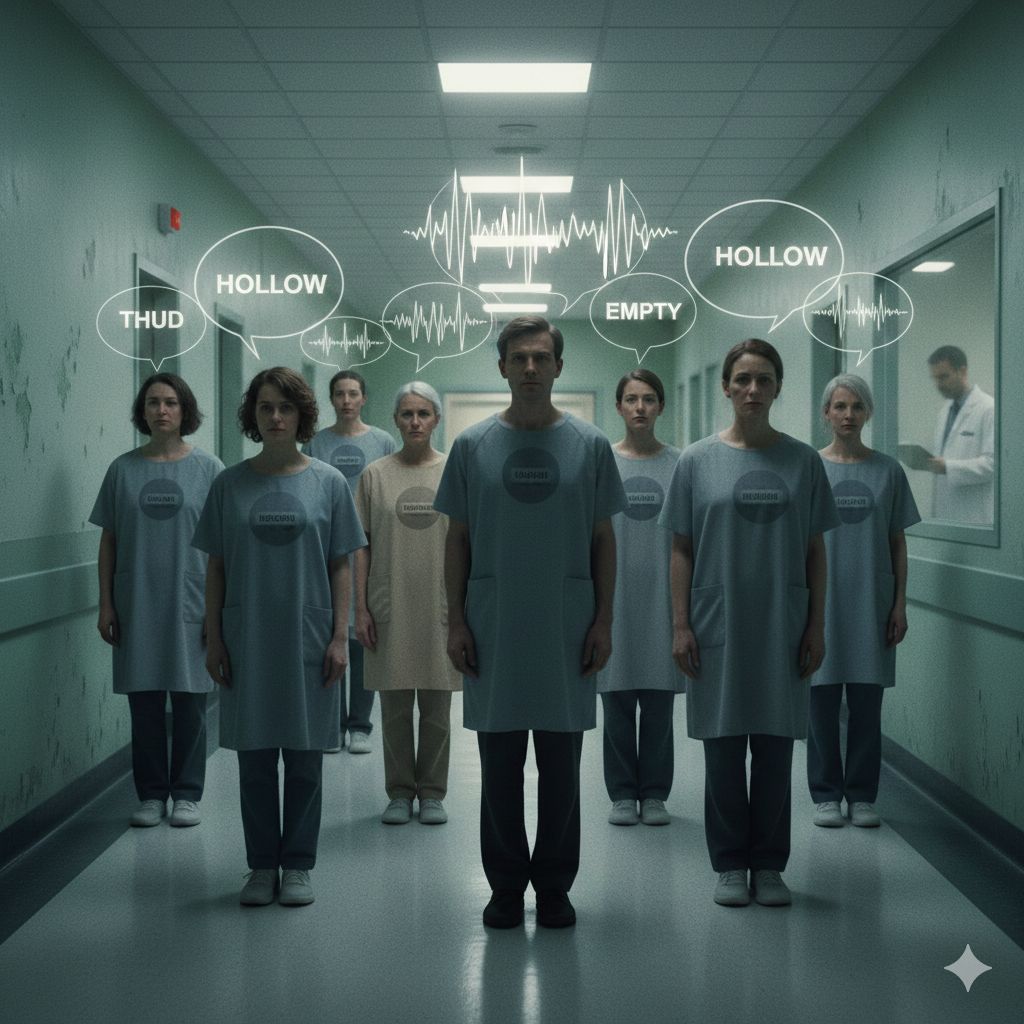
He recruited eight perfectly mentally healthy associates, including himself, whom he termed “pseudo-patients.” These individuals, with no history of serious psychiatric disorder, sought admission to 12 different psychiatric hospitals across the United States.
Their only instruction was to feign a single, vague symptom: auditory hallucinations of an unfamiliar voice saying the words “thud, hollow, empty.” This phrase was chosen to avoid any known symptoms of existing mental illnesses at the time.
The Findings: Diagnosed and Dismissed
Despite their only initial complaint being the auditory hallucinations, every single pseudo-patient was admitted. Eleven were diagnosed with schizophrenia, and one with manic-depressive psychosis (now often referred to as Bipolar Disorder).
Crucially, immediately upon admission, the pseudo-patients ceased all symptom-faking and behaved as they normally would—chatting, taking notes, and participating in ward activities. They were instructed to act normally and state that their symptoms had disappeared.
The staff, however, never detected the deception. The average length of stay was 19 days, ranging from 7 to 52 days. When they were finally discharged, the pseudo-patients were released with the telling diagnosis of schizophrenia ‘in remission’, suggesting that the diagnostic label, once applied, fundamentally altered the perception of their true state.
The Dark Side of the Label
Rosenhan’s observations painted a stark picture of institutional life.
- Behavioral Reinterpretation: Once labeled, the patients’ normal behaviors were often reinterpreted as symptoms of their supposed illness. For instance, note-taking, which was done openly, was occasionally recorded by staff in their charts as “excessive writing behavior” or “engaging in writing behavior.”
- Depersonalization: The pseudo-patients frequently noted the depersonalization and objectification by staff, who would discuss patients in their presence as if they were inanimate objects and avoid meaningful interaction beyond official duties.
- A Failure to Distinguish: Interestingly, it was the actual patients who often suspected the pseudo-patients were fakes. In one instance, patients voiced their suspicions to staff, saying things like, “You’re not crazy. You’re a journalist, or a professor. You’re checking up on the hospital.” Staff, however, dismissed these concerns.
The Counter-Attack and the Study’s Legacy
In the second phase of the study, a teaching and research hospital challenged Rosenhan, claiming that if he sent more pseudo-patients to their facility, they would successfully identify them.
Rosenhan agreed. Over a three-month period, staff were asked to rate every incoming patient based on the likelihood they were an impostor. Forty-one out of 193 patients were identified by at least one staff member as a potential fake.
The dramatic twist? Rosenhan sent no pseudo-patients at all during this time.
The study’s ultimate conclusion was damning: “It is clear that we cannot distinguish the sane from the insane in psychiatric hospitals.”
While the study has faced decades of scrutiny and criticism regarding its methodology and the veracity of some claims, its impact remains undeniable. It fueled the movement toward deinstitutionalization and played a pivotal role in the revision of the Diagnostic and Statistical Manual of Mental Disorders (DSM), encouraging a shift toward more specific, observable criteria rather than relying on context-dependent subjective interpretation. The Rosenhan experiment stands as a monumental cautionary tale about the inherent biases in diagnosis, the profound danger of labels, and the need for constant, compassionate scrutiny of the way society treats those deemed “mentally ill.”
 Anamolous Advocacy